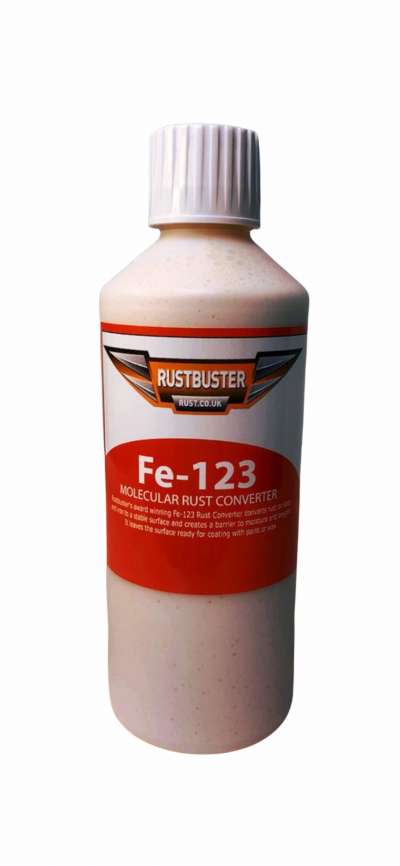
Fe-123 envelops rust at a molecular level, forming a neutral layer that shields the metal from moisture and oxygen. This layer prevents ion migration and stops further chemical reactions on the surface, preparing the metal for painting or waxing to ensure long-term protection. Independent testing by Practical Classics magazine confirmed that Fe-123 not only converts rust but also provides a paint-ready foundation without the need for neutralization. It earned a perfect score of ten out of ten and also won 'best in test' in Classics Monthly's long-term evaluations. Product Description A brush-applied rust converter for treating steel and iron before painting. Directions Summary instructions are as follows: De-grease the surface and remove loose rust with a wire brush. Shake the bottle well, pour a small amount of Fe-123 into a separate container, and apply it by brush directly to the surface rust, working it into the metal. Allow the product to react for 15 to 60 minutes, depending on the temperature (it may take longer in colder conditions). Fe-123 will initially turn purple upon contact with rust. Once the conversion is complete, the metal will turn black. If this doesn't occur, there may not be enough oxides present, or it may be too cold. If Fe-123 gets on paintwork or bright (non-corroded) metal, let it dry and then remove it with a Scotch-Brite pad before painting. Once the conversion is complete, you can paint or wax directly over the treated surface. However, avoid applying zinc-rich coatings over Fe-123 because the reaction and latex barrier can interfere with the zinc particles' electrical connection to the steel. Please see How To Use Fe-123 Rust Converter for comprehensive instructions. Cleaning Brushes and containers can be washed out in fresh water. Shelf life Shelf life is 12 months if stored at around 20c, assuming the product is not allowed to become contaminated. Do NOT allow it to freeze. Safety Fe-123 is classed as a non-hazardous product, but please wear suitable protective clothing, gloves and eye protection. FAQs Can I use Fe-123 on clean metal? Fe-123 specifically converts rust, so it needs oxidized iron to work effectively. If you apply it to clean metal without rust, the conversion won't occur.I've painted Fe-123 onto bright, clean metal and it's not working. What should I do? Fe-123 needs rust to convert. If you notice a milky or cream colour after application, it indicates that the product hasn't been effective. Remove it using a fine Scotch-Brite abrasive pad.Do I need to wash it off once converted? No, once Fe-123 has converted the rust to a dark purple colour, it is ready to paint without additional washing.Can I use Fe-123 as a primer for EM121 No, Fe-123 is a rust converter designed solely for rusted surfaces and cannot serve as a primer for EM121. Can you leave Fe-123 uncoated? The duration Fe-123 can remain uncoated varies with conditions. However, after a month, the risk of re-rusting increases. Can you coat Fe-123 on surfaces that reach high temperatures? No you can't, when applied to cold surfaces it will convert the rust but remember it's a latex binder and this can't withstand temperatures above 60�c for long periods and will smoke off. Remember The information given above is based on our experience and reports from customers. There are many factors outside our control and knowledge which affect the use and performance of our products and for which reason no warranty is given, expressed or implied. Users should make their own tests to determine the applicability of such information or the suitability of any products for their own particular purposes. How do I use Fe-123? Click here to learn how to use fe-123 rust converter.
Key Features
- Professional-grade component suitable for workshop and industrial use
- Simple to install and designed for durability
- Improves efficiency and ease of use in paint application or air tool work